16th Plan of Nepal in Pdf Details 2081/082 to 2085/086 published by National Planning Commission ( Rastriya Yojana Aayog). 16th Plan of Nepal in Pdf Nepali & English Languages. All the important facts and questions answered about the 16th plan of Nepal are given below. In Lok Sewa, Government Service exam & various other public services exam, 16th plan of Nepal is most important topics or chapter.
Nepal’s 16th Five-Year Plan (Sohrau Yojana), formulated by the National Planning Commission, outlines the country’s development agenda for the fiscal years 2081/82 to 2085/86. This plan is crucial for aspirants preparing for competitive exams, as it covers governance, economic growth, social justice, and sustainability. Below is a breakdown of its key components:
16th Plan of Nepal PDF- Important Notes/ Questions Answered
The plan revolves around three pillars:
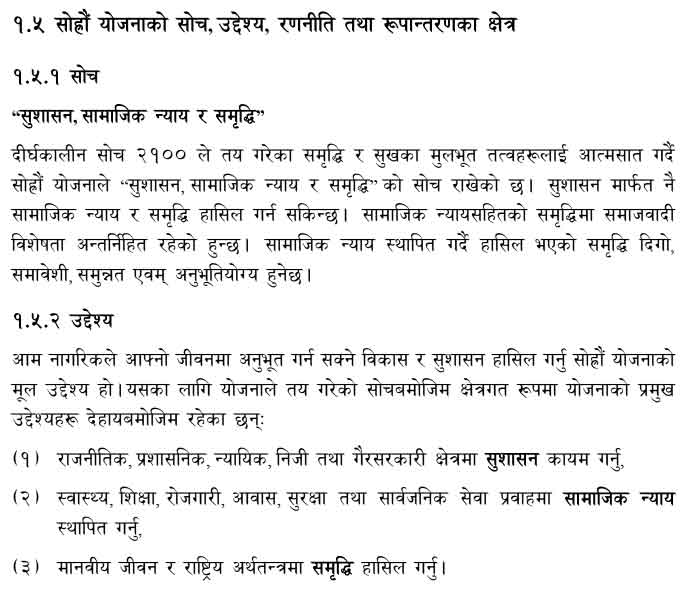
- Good Governance (Sushasan): Strengthening transparency, accountability, and efficiency in public institutions.
- Social Justice (Samajik Nyaya): Reducing inequality, ensuring inclusive access to healthcare, education, and employment.
- Prosperity (Samriddhi): Achieving high economic growth, infrastructure development, and environmental sustainability.
Key Highlights of Nepal’s 16th Plan Five-Year Plan (2081/82–2085/86) for Service Exam Preparation
16th Plan of Nepal Economic Targets
- GDP Growth: Aiming for an average annual growth rate of 7.5%.
- Poverty Reduction: Reducing the poverty rate to 15% by the end of the plan.
- Per Capita Income: Targeting a rise to $1,456 (current estimate) by 2085/86.
- Foreign Investment: Increasing FDI inflow to 3% of GDP.

3. Key Sectors & Initiatives- 16th Plan of Nepal
A. 16th Plan of Nepal- Infrastructure Development
- Energy: Expanding hydropower production to 2,877 MW (current) and aiming for 40,000 MW by 2100.
- Transport: Enhancing road connectivity to ensure 99% of households have access within 30 minutes.
- Urbanization: Promoting planned, sustainable cities and improving rural-urban linkages.

B. Social Welfare- 16th plan of Nepal PDF
- Healthcare: Reducing maternal mortality to 151 per 100,000 live births and expanding health insurance coverage.
- Education: Increasing literacy rates to 76.3% and boosting enrollment in higher education.
- Employment: Creating 72,000 productive jobs annually, focusing on youth and marginalized groups.
C. Governance & Technology

- Digital Nepal: Expanding internet access to 69.2% of the population and digitizing public services.
- Anti-Corruption: Strengthening legal frameworks and monitoring systems to curb corruption.
D. Climate Resilience
- Green Economy: Prioritizing renewable energy, afforestation, and disaster-resilient infrastructure.
- Carbon Neutrality: Aligning with global climate goals to reduce emissions by 45% by 2030.
4. Challenges Addressed
- Post-COVID Recovery: Mitigating pandemic-induced economic losses (GDP contracted by 2.4% in 2076/77).
- Structural Issues: Tackling low productivity, trade deficits, and unemployment through industrialization and skill development.
- Federal Coordination: Enhancing collaboration between federal, provincial, and local governments for effective resource allocation.
5. Long-Term Vision (2100)
The plan aligns with Nepal’s Long-Term Vision 2100, which aims to transform Nepal into:
- A middle-income country by 2030.
- A “Prosperous Nepal, Happy Nepali” society with equitable access to opportunities.
6. Exam Relevance
- Focus Areas:
- Memorize key statistics (GDP targets, poverty rates, energy goals).
- Understand strategies for governance, social inclusion, and climate action.
- Link Nepal’s goals to global frameworks like the SDGs (e.g., SDG 1, 4, 7, 13).
- Sample Questions:
- What are the pillars of the 16th Five-Year Plan?
- How does the plan address post-COVID economic recovery?
- Explain Nepal’s targets for renewable energy under this plan.
Conclusion
Nepal’s 16th Five-Year Plan is a roadmap for inclusive and sustainable development. For exam aspirants, grasping its objectives, sectoral priorities, and statistical targets will be essential. Pair this knowledge with an understanding of Nepal’s federal structure and global commitments to ace questions on governance and development!
Study Tip: Create flashcards for key terms like Sushasan, Samriddhi, and Samajik Nyaya, and practice writing short essays on cross-cutting themes like federalism or climate resilience.
=> Click Here to View 16th Plan of Nepal PDF in Nepali
=> Click Here to View 16th Plan of Nepal PDF in English
Best of luck with your preparations!
=> View Nayab Subba Nasu Exam Center details All Over Nepal